Why Mutant Crawl Classics?
To kick this blog off, I figured I would start with a topic that is central to the work I am posting on this website, which is my favourite tabletop roleplaying game: Mutant Crawl Classics! Notice how I didn’t qualify it as my favourite post-apocalyptic rpg. While I love fantasy and I’ll happily play any rpg of any genre, Mutant Crawl Classics is my favourite game by a wide margin.
Since I’ve decided to write this blog post, I’ve been thinking about the best to way to articulate what I love about the game. Mutant Crawl Classics is written by Jim Wampler and published by Goodman Games, and my initial pull to the game was instinctual. When I found out the game existed, I didn’t even think about it, I bought it without hesitation. I’m not usually so quick to buy something, there are lots of rpg books I want at all times, so I usually hum and haw for a while before not buying the book on account of financial responsibility. But for MCC, none of that was relevant.
At the time, I was working at Strategies, a local game store in Vancouver. Every Wednesday afternoon, I worked with the shop owner and in between helping customers, we would chat about the wide world of tabletop games. One Wednesday afternoon, my boss told me all about Dungeon Crawl Classics, and I thought it sounded great, definitely a game I wanted to play. I bought the DCC book relatively quickly after learning about it, but not before my usual action of considering a purchase.
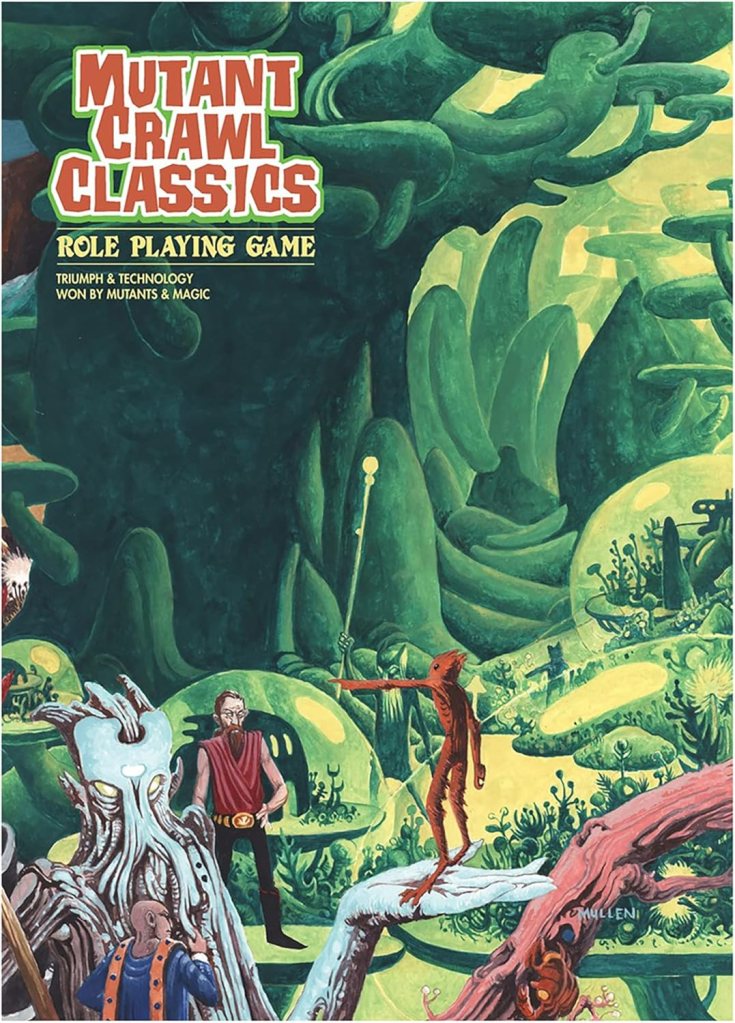
After pouring over Dungeon Crawl Classics for a few days, I realized the game had an oddball sibling: Mutant Crawl Classics. It was right there on the shelf next to Dungeon Crawl Classics, but I had overlooked it because I was too busy obsessing over the art on the DCC adventure covers. But, as soon as I picked up the Mutant Crawl Classics book and got lost in Peter Mullen’s cover art, I walked right over to the till and bought the damn thing.
Up until this point, I wasn’t a particularly huge fan of post-apocalyptic media. I had bought the Gamma World box that came out during the Dungeons & Dragons 4th edition era. I managed to run a single game for my college friends once. The setting for my game was our college campus in a post-apocalyptic mutant future, and we all had a fun and silly time. I particularly loved all of the strange mutants and characters, but I think how close the game felt to our own time was not something I particularly liked.
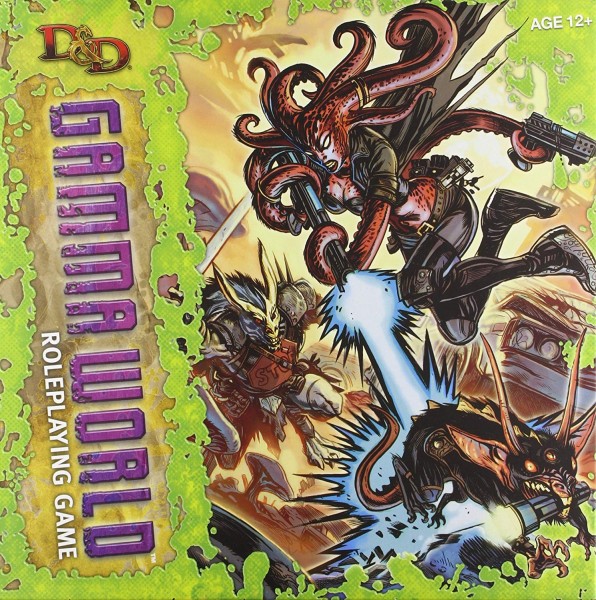
Gamma World is full of recognizable objects from our time being used in creative ways that a post-apocalyptic world necessitates. It is a fun and creative staple of the game’s design language and effectively communicates to the audience what is going on without saying it. But, I think all of the found objects from our time lessens my personal enjoyment of the game’s setting.
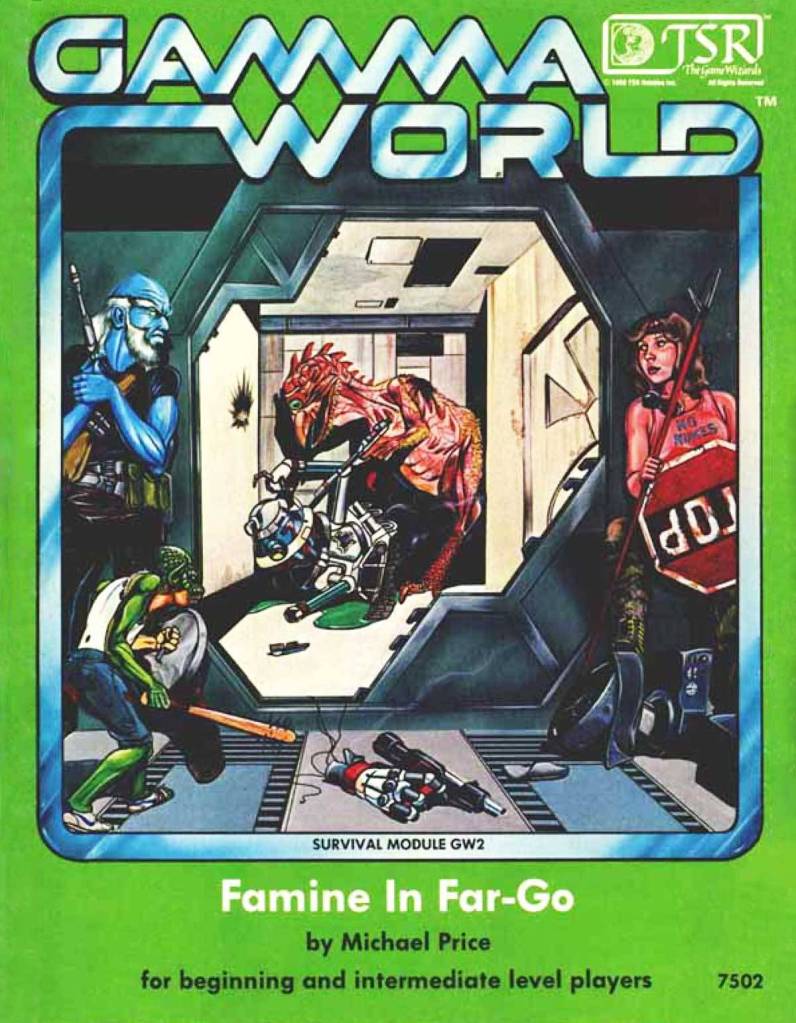
A lot of the post-apocalyptic media I had been exposed to was similar to Gamma World in that the timeline wasn’t so far from our own world. The story always seemed to be set around our time, give or take 75 years or so. The story was always something like ‘there was a nuclear apocalypse and everything went to shit’. These settings always feel so bleak and horrible, where everyone is out for themselves and won’t hesitate to gut you and steal your boots. Sure, this sort of setting is effective in giving the main characters something to rise above. But, it’s not the sort of setting for a game that my imagination wants to play around in for long.
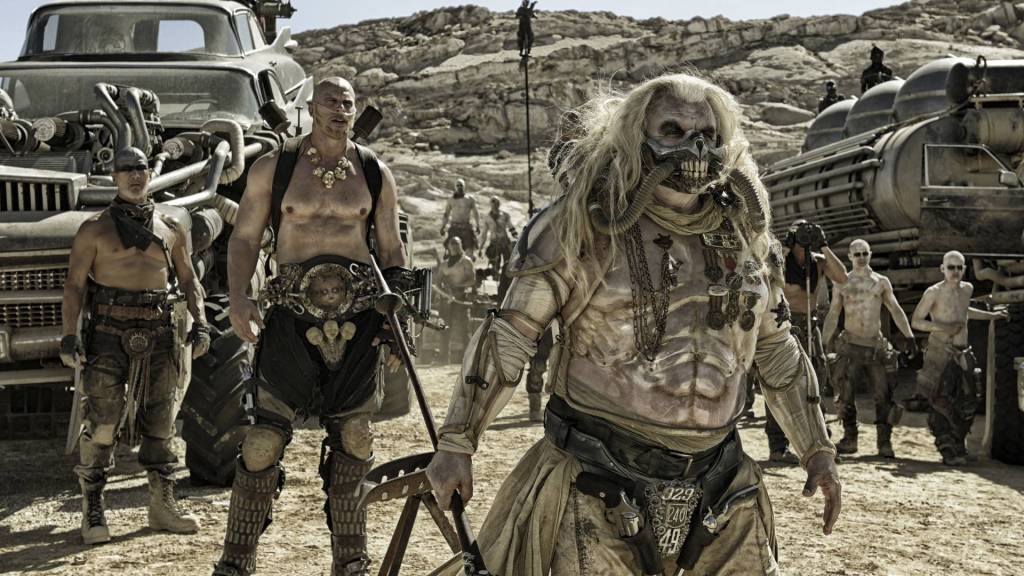
Now, Gamma World is a lot more colourful and less bleak compared to things like Fallout and Mad Max, but I think the familiarity of our world being destroyed still bums me out. In Mutant Crawl Classics, the story is a little different. The setting is Terra A.D. and it’s possibly but not confirmed to be our world, but only if our world continued to progress for thousands and thousands of years, then had some sort of civilization-wide destruction that mutated everything and sent everyone back into the stone age. Now, all of these stone age mutants are exploring their strange world and discovering lost retrofuturistic technology that to us, has a quality that is familiar but still unknown.
I think fantasy games are similar in this sort of detached-but-familiar timeline. Fantasy games typically have a medieval base setting that we recognize but is far enough away from the reality of our modern lives, so it’s easy to romanticize, especially when all of the wonder and magic is thrown in.
A setting like Terra A.D. feels like it’s ripe for our imaginations to explore and create. For myself, the rich and endless possibilities for imagination is the most important quality in a tabletop roleplaying game. Roleplaying games create opportunities for the players to engage their imagination in a way that video games, movies, and t.v. typically don’t. It’s why I fell in love with these game in the first place. But, I don’t want to spend lots of time dreaming up a bleak post-apocalyptic wasteland, and I think my imagination was ready for something different after about 20 years of playing almost exclusively fantasy games, so a colourful post-apocalyptic jungle hit just right for me.
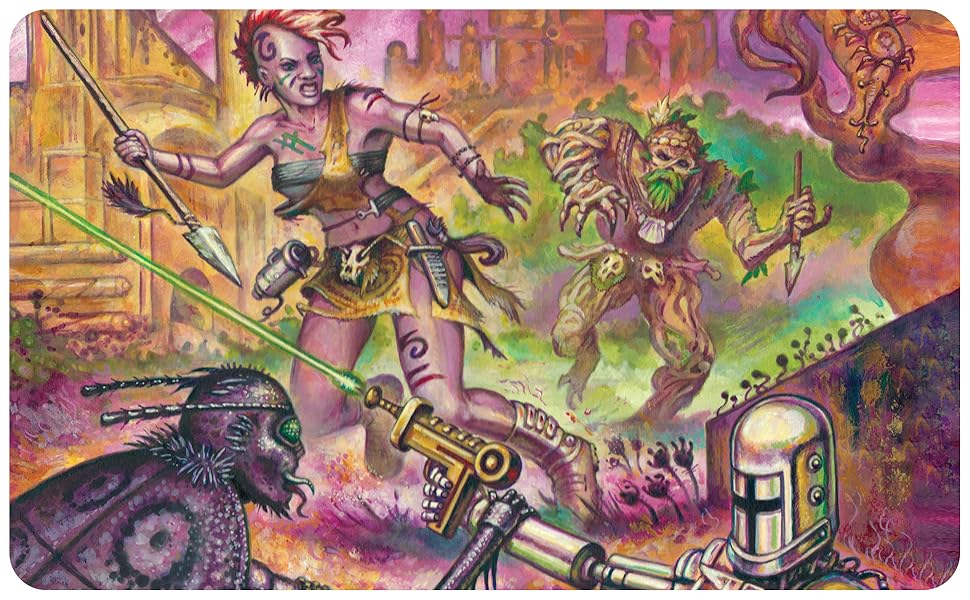
Despite Mutant Crawl Classics still being full of post-apocalyptic wastelands, the game didn’t feel so bleak and cutthroat. You play as seekers, various oddballs with powers that you use to take care of the needs of your community. In this stone age setting, small communities of humans, mutants, manimals, and plantients work together to survive. The world is strange, dangerous and very colourful. There’s plenty of brutality, but there also is a baseline pro-sociability that doesn’t leave me feeling hopeless like other post-apocalyptic media. In Terra A.D., there’s so much to explore and the possibilities of what you could discover feel endless. The only limit to the world of Terra A.D. is your imagination, and conveniently, imagination is limitless.
So, that’s the general idea of the first half of my love for Mutant Crawl Classics, but there is a second reason. MCC is a game after all, the rules shape the experience of playing the game in tandem with the setting.
The rules of Mutant Crawl Classics are almost always a talking point in every review of the game, and the response is mixed. People have lots of understandable criticisms of the game that lead to negative reviews. I’ll talk a few specifics in a bit, I get where they’re coming from. But, in my experience, and something I saw in at least one review somewhere, was that when actually playing the game, I’m having gobs of fun.
At it’s core, Mutant Crawl Classics is built on structure of Dungeon Crawl Classics, and DCC is so much fun to play. For me, the dice chain and spellcasting are what create a lot of fun and excitement during a game, and both of those are also found in Mutant Crawl Classics.
The dice chain mechanic is great! I won’t get into the specifics here, there’s lots of easy to find information about it if you want to know more. But my opinion is that more polyhedral dice = more fun.
The real star of the show of Mutant Crawl Classics are the mutations. These function like spellcasting in Dungeon Crawl Classics, which is different than what one would be used to if you’ve only played D&D up to this point. Whenever you cast a spell or use a mutation, you roll on that spell/mutation’s chart, and depending on your result, which can go up to 30+ thanks to the dice chain, a variety of wild and unexpected things can occur because spell and mutation tables are packed with exciting results. When something unexpected occurs from a mutant using a wacky mutation, that’s when the table erupts with excitement. For MCC, mutations create big fun moments that make you excited to keep playing.
But the mutations brings me to a common criticism of the game. Mutations are limited to mutants, manimals, and plantient characters, but there are three other human character options. The Healer, Rover, and Sentinel are all stone age humans that have the added bonus of being able to interact with technology better thanks the technology being meant for humans.
Now, for those of you who don’t know, Dungeon Crawl Classics’ Warrior class set the bar high for how much fun the ‘boring old’ human class can be with the Might Deeds mechanic. In comparison, the MCC human classes have nothing like that and without mutations, they seem really unexciting compared to the other classes. I think when people express disappointment about this in their reviews, it makes a lot of sense, as these classes are pretty bare bones. For anyone interested in making a MCC zine, there’s definitely space to give more options to these characters!
However, the human characters are the ones who are most likely to load up with an arsenal of artifacts and weapons. Weapons and gadgets do make humans a lot more fun to play in the game than they first look. I still don’t think they’re as fun as mutations and the classes do lack an exciting mechanic that would make someone want to play one in the first place, but I think they’re still worth playing. I always try to have humans in my group, they often get to be the one to interact most when dealing with ancient tech and advanced A.I. gods that are being difficult, and I always try to include a variety of interesting artifacts for them to discover.
In my experience, these human characters are best suited to players that like being the ‘face’ of the group and find joy in figuring out of how use a mysterious artifact. The artifact weapons are also strong enough that the humans don’t feel like they’re irrelevant in a fight compared to the mutants. So ultimately, I think the criticisms of the human options are fair, but not a reason to totally disregard the game, because there is definitely fun to be had with them.
The human classes are emblematic of some of the larger criticisms I’ve seen as well. More or less that overall the MCC core book is under baked. I get where this is coming from too, there are some gaps, I do think the patron A.I.’s should each have 2 more wetware programs. But, again, when I actually play the game, everything I seem to need to run the game and have fun is in the core book.
I think this point may come down to personal taste. I’m not someone who is very concerned with rules for every tiny thing. I’m happy being flexible and coming up with rulings on the fly as needed, and so far, the MCC book has given me everything I need to run a smooth and fun game.
Maybe I should have mentioned this at the start of this section, but Mutant Crawl Classics is a d20 system. This is may be another personal taste thing, but for me, I love a d20 system. It’s what I grew up on, and I find it really easy to explain how it works and get new people playing games immediately.
So despite valid criticisms about the core Mutant Crawl Classics book, I do think it is still an excellent game that Jim Wampler and Goodman Games made. I think any game built upon Dungeon Crawl Classics has a baseline of excellence, and Mutant Crawl Classics is no exception. Every game session is full of big moments of drama and excitement that gets everyone at the table smiling and laughing. And for me, as someone running games in the world and creating zines for the game, Terra A.D. is a setting that really tickles my imagination. I feel like there’s so much space to explore and create in Terra A.D. and so much for players to discover and delight in.
So, these are my thoughts on why Mutant Crawl Classics is my roleplaying game of choice. I feel like there’s so much more I could have included in this post, but this post is already a long enough ramble. I’ll just finish by saying that I hope you give Mutant Crawl Classics a try, and play as that skunk-man who has the ability to stretch his body like rubber and shoot lightning from his fingertips, or the stone age human who discovers a plasma sword from the past and starts chopping down those nasty malfunctioning clankers.

